Although 81 years have passed, the Belgian people have not forgotten the sacrifices that American soldiers made to liberate their country during the Battle of the Bulge. Fought over the snowy landscapes of Belgium and Luxembourg from Dec. 16, 1944, to Jan. 25, 1945, the Battle of the Bulge was one of the deadliest campaigns of World War II. The name derived from the German army’s attack on the U.S. Army’s front lines, the position closest to the enemy where soldiers, tanks and artillery are located. The German army’s attack formed a large “bulge” in the lines.
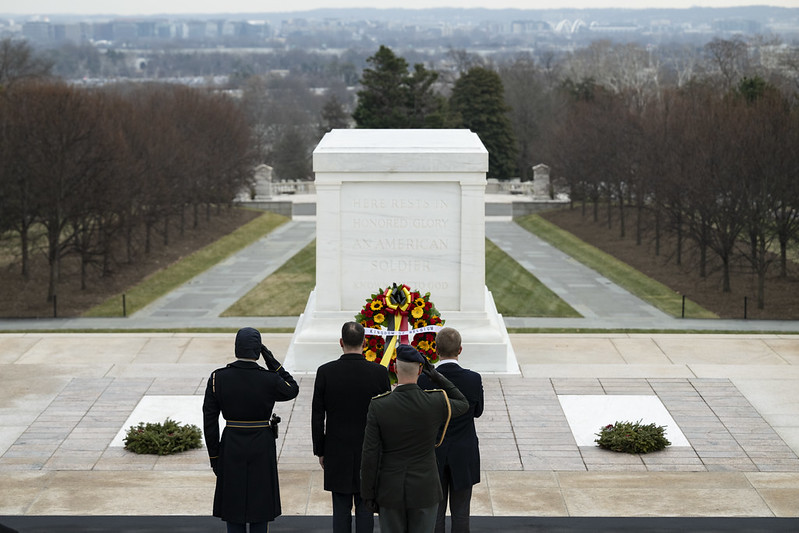
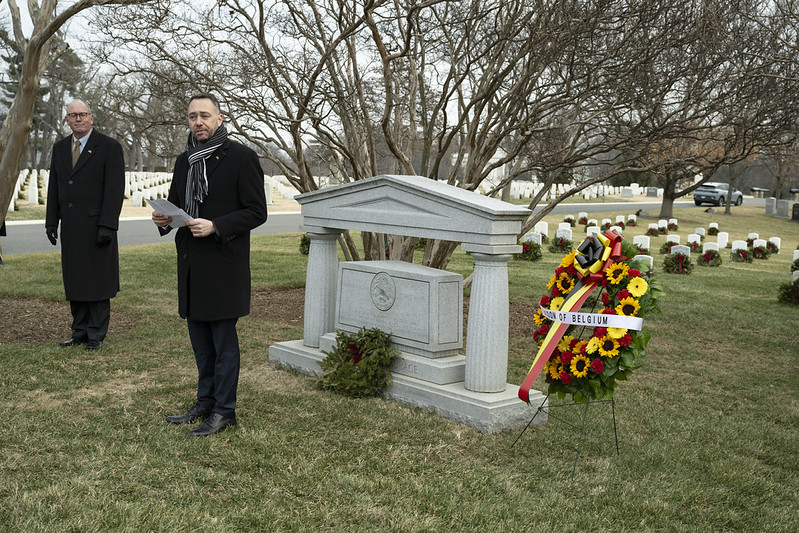
On Jan. 5, 2026, Belgian Deputy Prime Minister and Minister of Foreign Affairs Maxime Prévot visited Arlington National Cemetery and laid wreaths at the Tomb of the Unknown Soldier and the Battle of the Bulge Memorial in Section 21.
At the memorial, Prévot told an audience of Americans and Belgians that American service members’ “courage and selflessness are immortalized in monuments scattered across our towns and villages.” Describing the Battle of the Bulge as a powerful illustration of the “unbreakable bond” between the United States and Belgium, he added, “This is, above all, an American story, a tragic and glorious testament to America's unwavering commitment to defend freedom, democracy and human dignity.”
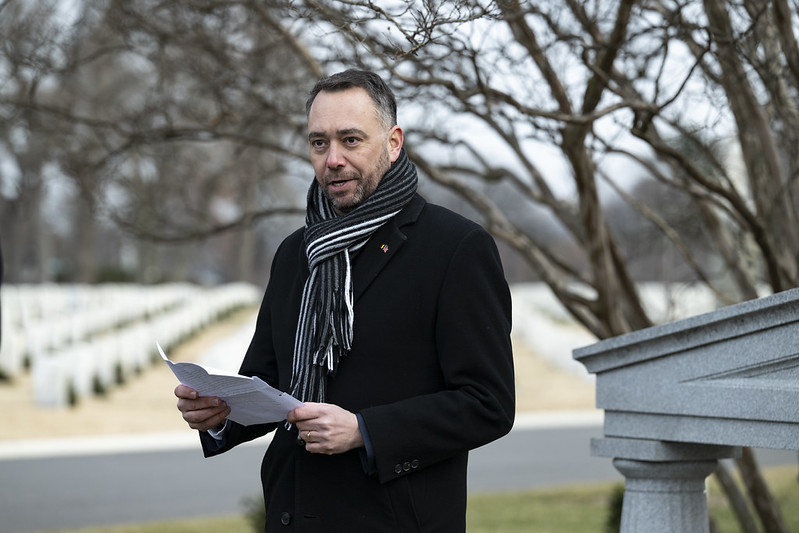
Prévot has a personal connection to the Battle of the Bulge. His grandparents took care of American military graves, visiting them, ensuring their upkeep and placing flowers at the headstones. They also sent pictures and letters to the families of the fallen resting under Belgian soil. When they grew too old to continue caring for the graves, they passed the responsibility to Prévot’s mother. “Let us preserve the freedom they bestowed upon us and pass it on to those who come after us,” he said.
President of the Battle of the Bulge Association Steven Landry described the battle itself, listing some of the U.S. Army units and the Belgian locations over which they fought. “Ultimately, almost 81,000 American and 1,500 British soldiers were killed, wounded, captured or otherwise missing in action,” he said. He also thanked the Belgian people for keeping the memory of American sacrifice alive. “When our veterans return to your country, they are treated like heroes,” he emphasized, “and your people’s care and honor of American graves on your soil is both appreciated and inspiring.”
Prior to the ceremony at the memorial, Prévot, accompanied by Belgian Ambassador Frederic Bernard and Defense Attache Brig. Gen. Marco Madile laid a wreath at the Tomb of the Unknown Soldier. After the ceremony, Prévot said that visiting Arlington National Cemetery was important to him because Belgium, and all of Europe, owes a debt to the United States. “The remembrance of all those sacrifices makes it important to underline that even now, more than ever, we need to consolidate the ties between the U.S. and the EU,” he concluded.