U.S. Army Commander of the Guard Capt. Sean Paul Stolarski used his Jan. 9, 2026, Tomb Badge ceremony to deepen the connection of the Tomb of the Unknown Soldier to the families of the fallen.
Stolarski, a 2021 graduate of the U.S. Military Academy from Weston, Connecticut, previously served as a platoon leader in the 1st Cavalry Division at Fort Hood, Texas. He earned his Tomb Badge (officially referred to as the Guard, Tomb of the Unknown Soldier Identification Badge) after passing five phases of testing and demonstrating high proficiency in Army and Tomb Guard knowledge. Tomb Guards who earn the badge, one of the Army’s rarest and most prestigious, are referred to as Sentinels.
Since 1948, the Tomb Guards of the 3d U.S. Infantry Regiment (The Old Guard) have stood watch over the Tomb of the Unknown Soldier at Arlington National Cemetery—24 hours-a- day, seven days-a-week, in all kinds of weather. Their vigilance and precise rituals honor the three Unknowns buried at the Tomb, as well as all unknown or unidentified American service members who have paid the ultimate sacrifice.
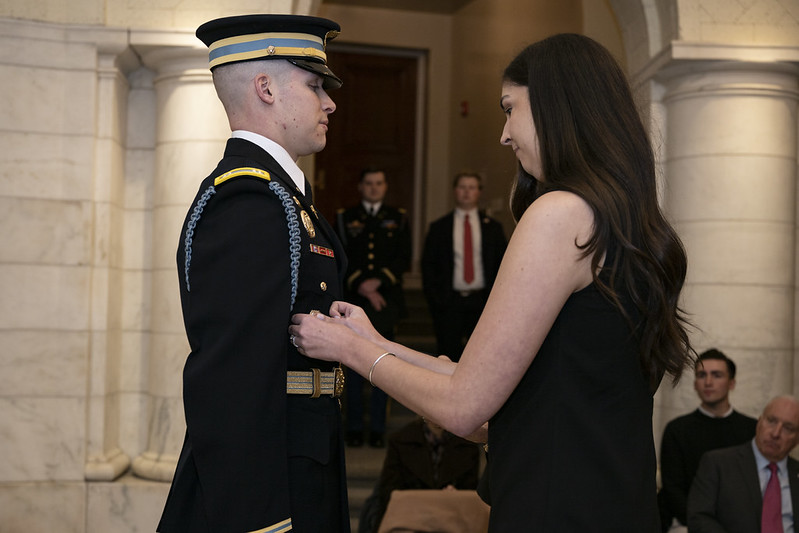
After Stolarski’s wife, Annabel, pinned the Tomb Badge to his right breast pocket, he led the soldiers in the room in reciting the “Sentinel’s Creed.” Then, Colleen Shine—a member of Sons and Daughters in Touch, a volunteer organization that unites children of American service members killed or missing in action from the Vietnam War—came to the podium. Stolarski had invited her to the ceremony to remind his fellow Tomb Guards of the connection between the Tomb of the Unknown Soldier and still-missing service members.
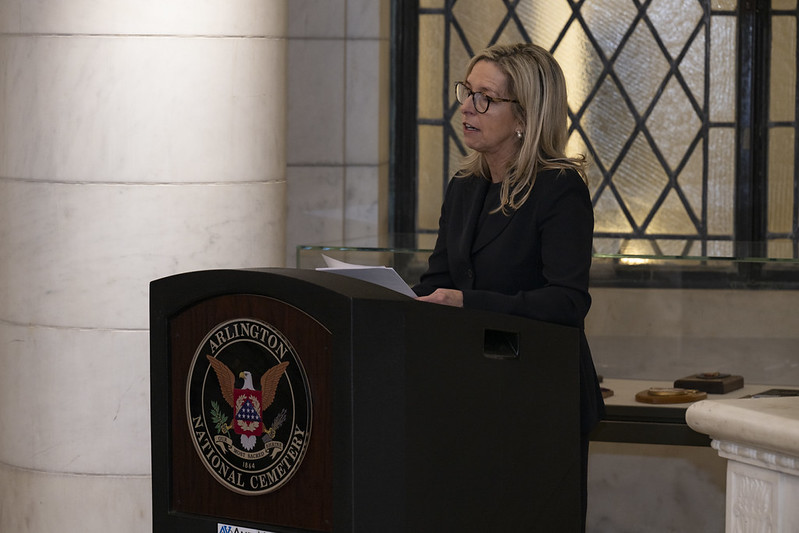
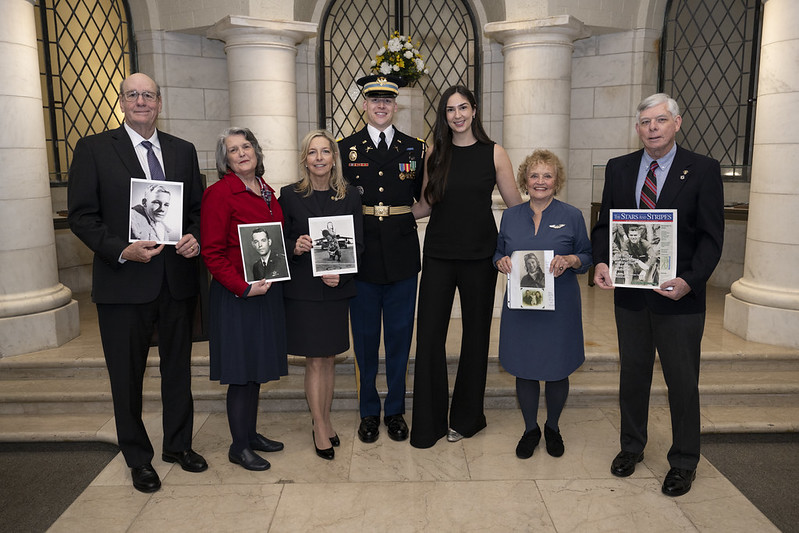
Shine spoke about searching to find her father, U.S. Air Force Lt. Col. Anthony C. Shine, whose aircraft went missing over the Laos-South Vietnam border in 1972; he was identified and buried at Arlington National Cemetery in 1996. Shine then introduced other Gold Star family members (those with family who died or went missing in the line of duty) in the audience. Each stood, held a photograph of a loved one in uniform, stated the name of the person in the photo, and described their actions and what led to their disappearance.
When the last person sat down, Shine noted that Gold Star families often visit the Tomb, emphasizing that the Tomb Guards’ mission connects the families to their loved ones’ sacrifice. “It’s through your discipline and devotion that America remembers,” she said, before asking Stolarski to lead everyone in 21 seconds of silence in honor of America’s missing service members, their families and each Tomb Guard.
At the end of the silence, Stolarski addressed his soldiers, reiterating Shine’s message that Gold Star families “actually inspire us to do the hard things.” As his eyes teared up, he said, “I celebrate you. Your families are not forgotten.”
Stolarski thanked everyone for their support and spoke about his love for his mission as a Tomb Guard. “If I could serve 20 years here, I would do it in a heartbeat,” he said. He concluded by telling the Gold Star family members, “We want to be perfect for you and for your loved ones who have given everything for us.”
Two of Stolarski’s soldiers spoke highly of his leadership. Sgt. Derek Beasley said that Stolarski leads by example and stresses the importance of connecting with military families. “He always reminds us that one of our main missions is talking to Gold Star family members who have lost a service member in battle,” he said. Staff Sgt. Damien Frombach agreed, saying he had never been to a Tomb Badge ceremony where MIA and Gold Star families had been invited. “That's what this mission is about,” he said.
The ceremony ended with the addition of Stolarski’s name on the Tomb Badge wall. He will now be known as Badge 736, along with his official title of Commander of the Guard.