During the Vietnam War, U.S. Air Force Capt. Harry Pawlak flew dangerous low-level reconnaissance missions over Vietnamese jungles in his Cessna O-1E, often within close range of enemy guns. He named his aircraft “Darlene,” after his wife. “He loved flying low and slow,” Darlene recalled. Pawlak served in the Air Force for more than 20 years, retiring as a colonel. On May 7, 2026, the decorated pilot was laid to rest at Arlington National Cemetery.
Pawlak flew more than 700 combat missions in Vietnam from 1964 to 1967, mostly in his Cessna, scouting for enemy activity. Early in his tour, he flew over a large group of people and swooped down to determine if they were friend or foe. Flying behind him was his wingman, a South Vietnamese colonel. Suddenly, the South Vietnamese colonel called over the radio that he had been hit and could not climb. Pawlak flew underneath him, zigzagging to draw enemy fire away until both were out of range and could return to base. For his bravery during this action, Pawlak earned the Vietnam Medal of Gallantry with Silver Star, a rare award for Americans.
On Feb. 15, 1966, Pawlak earned an American Silver Star for firing a rocket flare at an enemy convoy and destroying more than 80 trucks in a chain-reaction explosion that shattered his windshield, burned his face and temporarily blinded him. His wingman instructed him how to fly until he regained his sight.
Pawlak was also shot down twice. The first time was over Laos, where villagers captured him. He was able to escape but spent three weeks through the jungle to reach his base, surviving on bugs and lizards and losing 73 pounds. The second shoot-down occurred over South Vietnam, where he landed on a beach under fire until helicopters extracted him and his Cessna. His aircraft was repaired, and he flew it the next day.
After his service in Southeast Asia, Pawlak served with the 1st Air Force Region Headquarters at Andrews Air Force Base, where he also flew government officials as part of the 89th Military Affairs Wing. He served at the Pentagon, Robins Air Force Base in Georgia, Wright-Patterson Air Force Base in Ohio and Ramstein Air Base in West Germany. When Pawlak retired in 1988, he had logged more than 5,000 flying hours and earned numerous medals, including 12 Air Medals, the Legion of Merit and four Meritorious Service Medals.
Following his  career, Pawlak continued to be a leader in the military and aviation community. He served as the president of the Daedalians (a military aviators' organization), vice president of the Military Officers Association of America and treasurer of the Air Force Association.
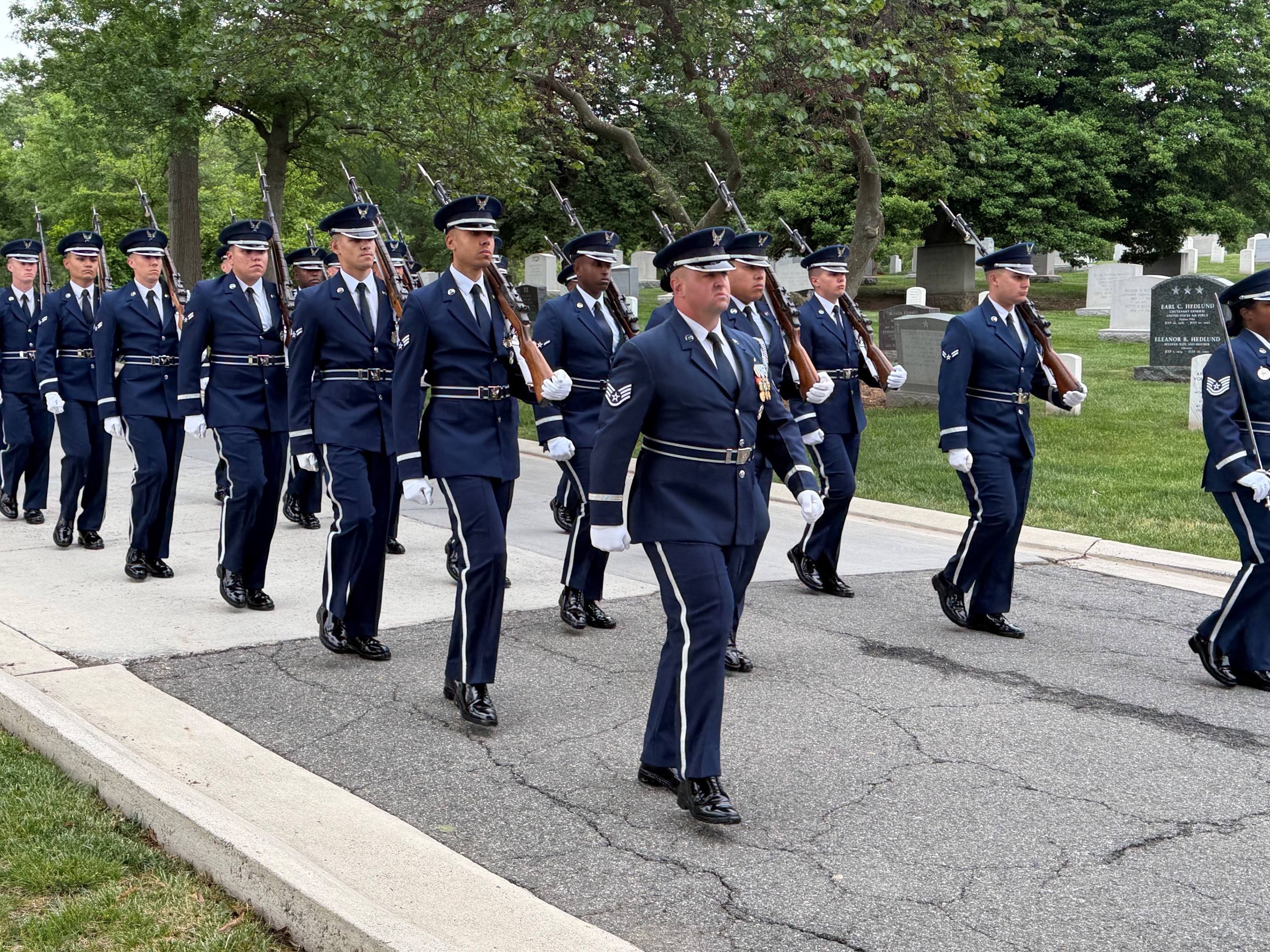
Thirty-two family members attended Pawlak’s funeral service—including his wife, children, grandchildren and great-grandchildren—most wearing combinations of red, white and blue and holding small American flags. They followed an Air Force Honor Guard that carried Pawlak’s urn to Section 12, which they placed next to his officer’s dress hat on a small table.
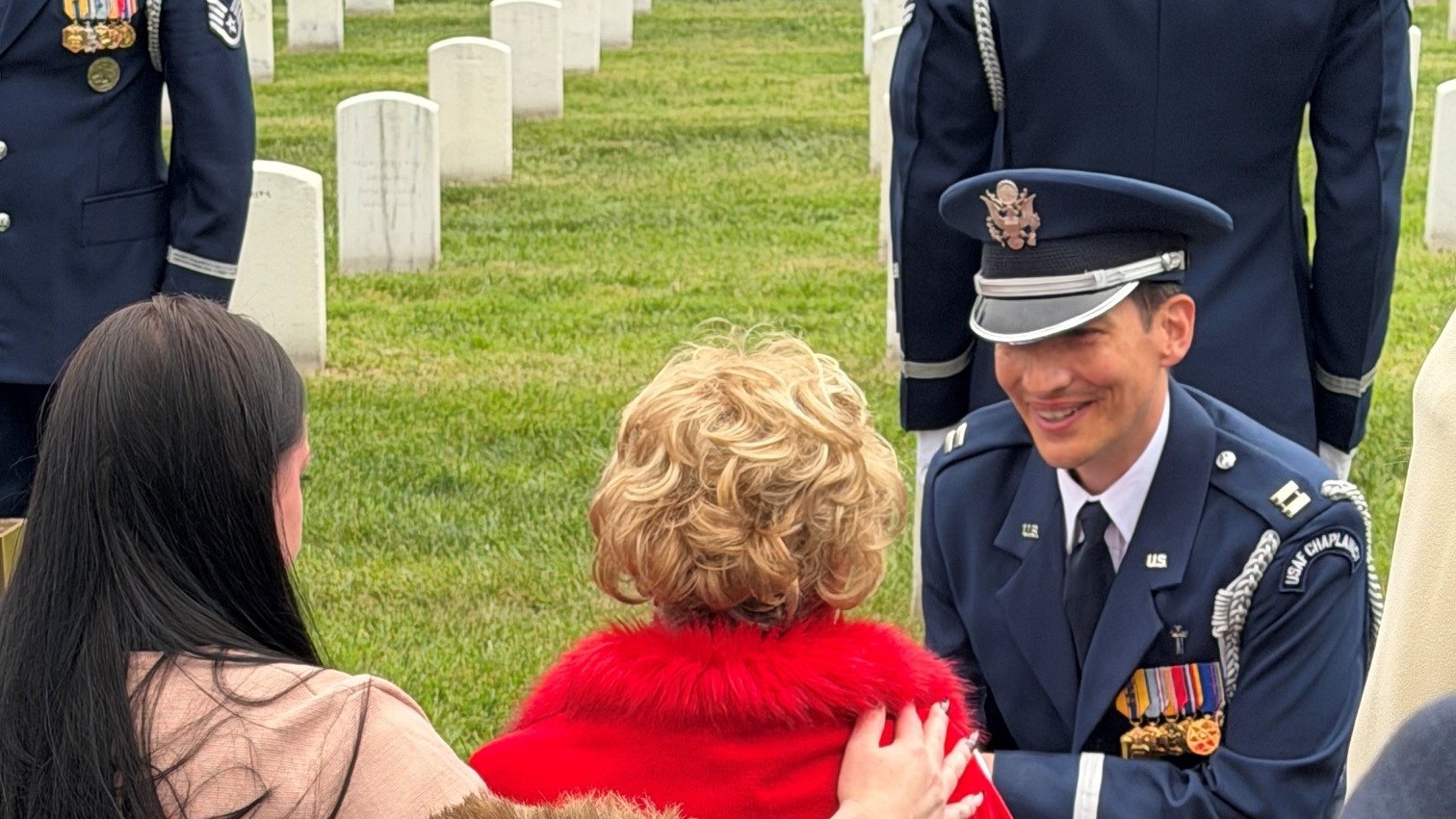
U.S. Air Force Chaplain (Capt.) Joshua Zarzana described Pawlak as “a man living a life of courage, service and devotion to those he loved.” Zarzana added that Pawlak’s greatest joy was his family. “To see the smiles on your faces and also your heartache in the loss of this man,” he said as he addressed Pawlak’s family members, “it’s very clear to see that he was loved exceptionally well.”
After an Air Force firing party fired three volleys, a bugler sounded Taps and a bagpiper played “Amazing Grace,” Pawlak’s family carried his urn and hat to his final resting place. They laid red, white and blue flowers next to the urn as they said their last goodbyes. Some touched the urn while others wiped away tears.
After the service, Darlene explained why she chose Arlington National Cemetery as her husband’s final resting place. “He was a hero,” she said, as her voice quivered with emotion. “He did courageous things for our country, and I just wanted him here.”