In 2005, Sean Webb was watching “The Great Raid,” a movie about the liberation of the Cabanatuan POW camp in the Philippines during World War II. Many Cabanatuan inmates had survived the infamous Bataan Death March, a 65-mile trek under harsh conditions to POW camps further north. Webb’s 92-year-old grandmother, Lucy Irene O’Brien, was watching the film with him when she suddenly said, “My brother Malcolm was in it” — referring to the Cabanatuan POW camp. Her brief statement stunned Sean, who did not know he had a great-uncle, much less one who had been a POW.
Sean’s great-uncle, U.S. Army Cpl. Malcolm S. Webb, was serving in an ordnance company, which supplies ammunition and weapons to fighting units, when American forces on the Philippine Islands’ Bataan Peninsula surrendered to the Japanese army on April 9, 1942. With fellow prisoners of war, he endured the Bataan Death March and was eventually sent to Cabanatuan POW Camp #1. More than 2,500 POWs at that camp perished from hunger and disease — including Webb, who died of dysentery there on June 29, 1942, at the age of 25. At the camp’s cemetery, he was buried in a common grave with 25 other deceased POWs.
Webb, the youngest of six children, grew up in Louisville, Kentucky, and worked as a welder for the Louisville and Nashville Railroad before enlisting in the Army in October 1940. He married Regina Bush, also from Kentucky, before shipping off to the Philippines in August 1941.
After Regina received word of her husband’s death, she submitted a poem to the local newspaper:
Just when his days seem brightest,
Just when his hopes seemed best,
God called him from amongst us to his eternal rest.
Sadly missed, but God knows best.
After the war, American Graves Registration Service (AGRS) personnel exhumed those buried at the Cabanatuan cemetery and relocated them to a temporary U.S. military mausoleum near Manila. In 1947, the AGRS attempted to identify the remains. Scientists identified 16 of the 25 sets of remains from the common grave, while the remaining nine (including Webb’s) were declared unidentifiable and reburied as unknowns at the Manila American Cemetery and Memorial.
 Yet the U.S. military never stopped trying to identify those who died at Cabanatuan. In November 2019, the Defense POW/MIA Accounting Agency (DPAA) exhumed the gravesite in Manila. DPAA contacted Eugene O’Brien — Cpl. Malcom Webb’s nephew and Sean Webb’s father — to request a DNA sample. Eugene was shocked. He knew almost nothing about his uncle who had died at Cabanatuan a decade before he was born. “My mom didn't really talk a whole lot about him,” he said. “She would just tell me I looked like him.”
Not long after Eugene provided his DNA sample, three mortuary affairs officers from Fort Knox visited him to present the evidence identifying Cpl. Webb. Eugene was amazed by the level of detail and respect the military had shown to his uncle, despite how long ago he had died. Eugene decided that, due to everything his uncle had endured in service to the nation, he should be laid to rest at Arlington National Cemetery. “I never thought anything would come from that sample I gave,” he said, “but then I thought if I could bring him back to the United States, it would be an honor to bury him at Arlington.”
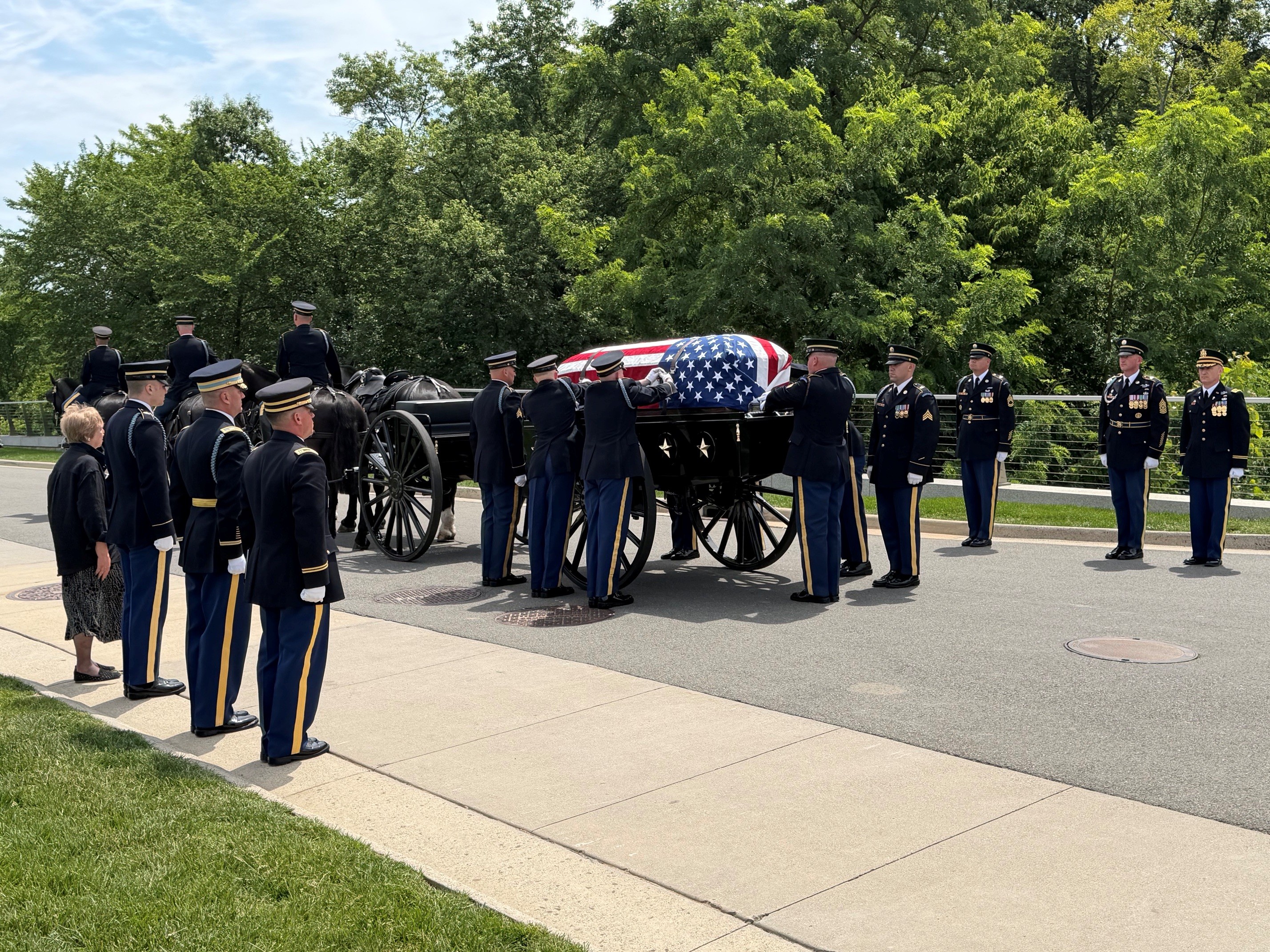
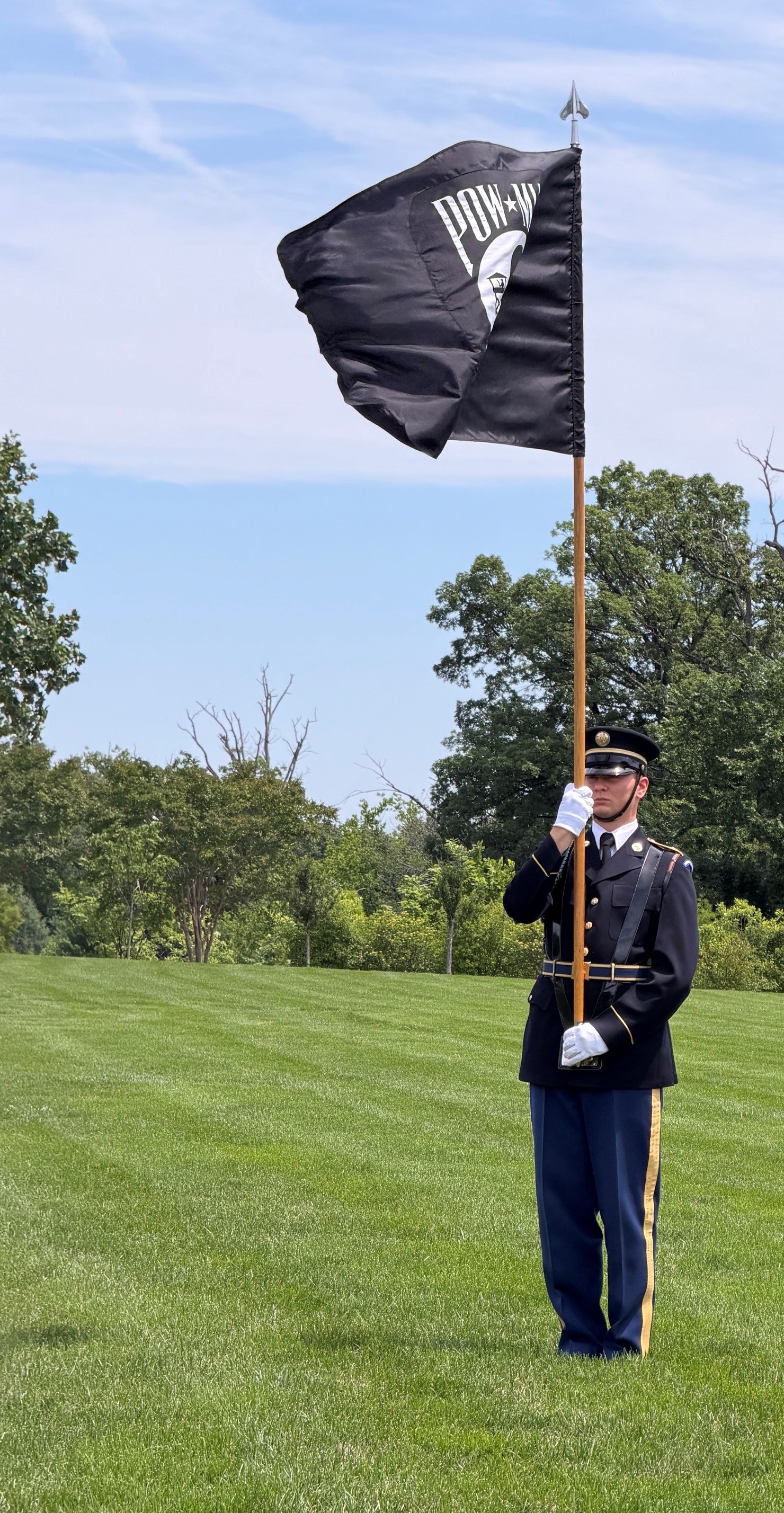
On June 1, 2026, a horse-drawn caisson brought Webb to his final resting place at Arlington National Cemetery in Section 81. As an honor guard unfolded a flag over the casket, a POW/MIA flag snapped in the wind, held by a soldier.
All three Webb family members — Sean, Eugene and his wife, Sheree — attended the funeral and expressed gratitude that the U.S. military had never given up on identifying their relative and bringing him home. Receiving the tri-folded flag from Col. Thomas J. Kilbride filled Eugene with both sorrow and: sorrow that his mother and grandmother did not live to see Webb’s return, but also pride in his uncle’s service. Cpl. Webb, who had suffered and died in brutal conditions and lay unidentified for decades, now rests in hallowed grounds, where his service will not be forgotten.